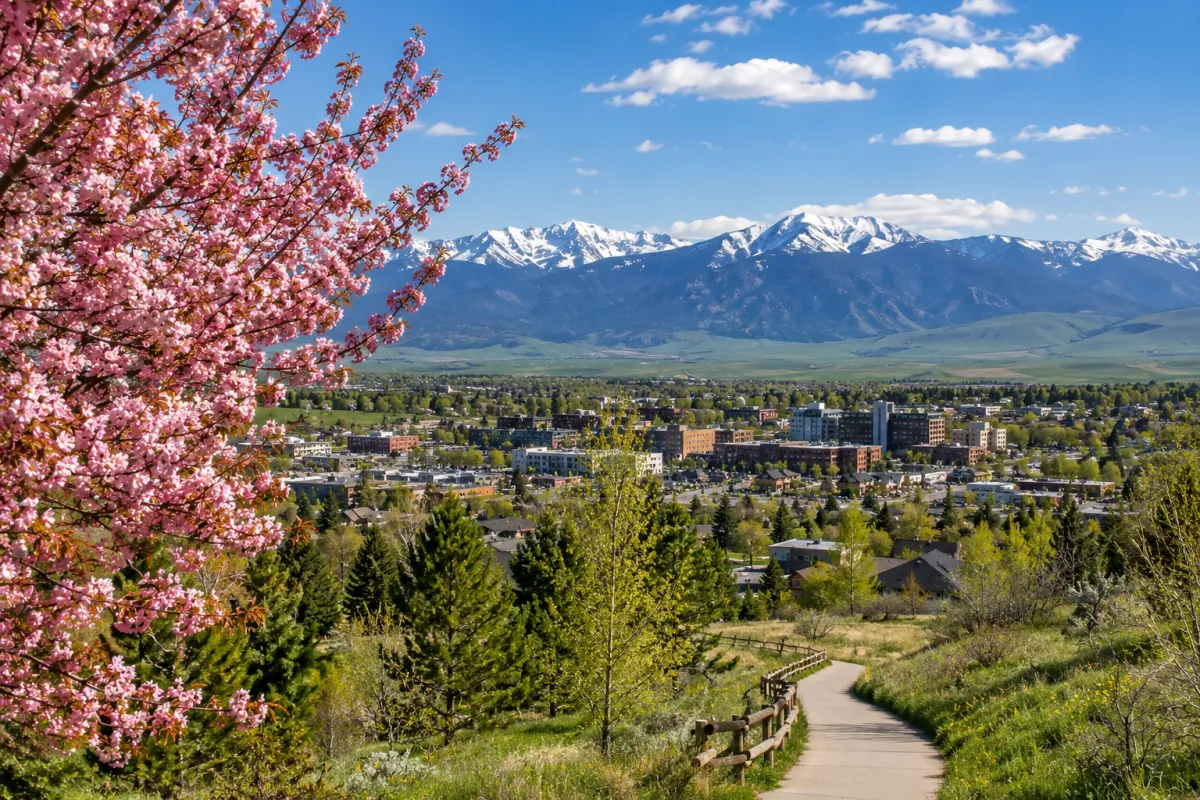
What Does the Spring Real Estate Market Look Like in the Gallatin Valley?
Why the valley wakes up between February and May, and what that means whether you are buying or selling.
If you are thinking about buying or selling in the Gallatin Valley and wondering whether to wait for spring, here is what the season actually looks like on the ground, not the version in a national headline. Spring is typically the busiest stretch of the year here, and that cuts both ways: more homes to choose from if you are buying, more buyers competing if you are selling. This is what changes when the snow starts to go, and how to think about your own timing.
Short answer: In the Gallatin Valley, the market starts waking up in February and March and hits full stride in April and May, as more homeowners list and more buyers, a lot of them arriving from out of state, come back into the search. Nationally, spring brings sellers the strongest prices of the year, and here it brings buyers the most inventory. The tradeoff is competition. Which side that favors depends less on the calendar than on where mortgage rates and inventory sit that particular year.
When does the spring market actually start in the Gallatin Valley?
It starts earlier than most people expect, usually February and March, then accelerates through April and May. The calendar says spring begins in late March, but the market begins stirring as soon as the days lengthen and buyers who paused over winter start looking again. By May the valley is at its busiest.
There is a local rhythm to it. Winter here is genuinely quiet, fewer listings, fewer showings, motivated people on both sides. When February comes and the light returns, sellers who were waiting for better weather start preparing to list, and inventory climbs week over week into the summer. Buyers follow the inventory. If you want to understand the other end of that cycle, the case for buying a home in Montana during winter covers what the slow season offers the people willing to shop in the cold.
The practical read: spring is not a single moment, it is a ramp. The earliest part, late February into March, often has more buyers than fresh listings, because seller activity lags the return of buyer demand by a few weeks. That gap is worth knowing whichever side you are on.
Why do more homes sell in spring here?
Spring lines up with the things that actually move people: weather, relocation, and the school calendar. Warmer conditions make it easier to list, show, and move, and families relocating from out of state aim to be settled before the next school year. Those forces concentrate demand into the first half of the year.
Several things stack up at once in the Gallatin Valley. Snow clears, so yards, roofs, and driveways show honestly rather than under a foot of white. Out-of-state buyers, a large share of this market, plan spring and summer trips to tour in person. Families timing a move around the school year want to close in spring or early summer, which for many means starting the search in March. Land and acreage, hard to evaluate under snow, become easier to walk and assess.
That concentration is why the season rewards preparation. The buyers are real and motivated, but so is the competition among sellers by the time May arrives and inventory is at its fullest.
Is spring a better time to sell or to buy?
For sellers, spring has nationally produced the strongest prices of the year. For buyers, it brings the widest selection but the most competition. Across the country, homes listed in spring sell for the highest premiums over their estimated value, which is the clearest single argument for listing in this window, and the seasonal logic behind it applies to the Gallatin Valley as much as anywhere.
The seller case is well documented. ATTOM's 2026 analysis of more than 52 million home sales found March produces the highest average seller premium at 10.7 percent over estimated market value, with May and April close behind at 10.2 percent each. Premiums build in late winter, peak in spring, and taper through the fall, where October sits lowest at 7.9 percent. ATTOM's reporting on the pattern calls spring the prime window for sellers, driven by that first-half surge in buyer demand.
The buyer side is the mirror image. More inventory means more choice, but a spring listing tends to draw more eyes and, in a tight year, more offers. The counterintuitive move for a buyer who values leverage over selection is to shop the shoulder seasons, late fall and winter, when motivated sellers meet thin competition. For a fuller version of that argument, the post on whether now is a good time to buy in the Gallatin Valley walks through how to weigh timing against your own plans rather than the calendar.
What should sellers know about listing in the Gallatin Valley spring?
Get ahead of the ramp. The strongest results tend to go to homes that are listed and looking their best by the time buyer demand peaks, which means the prep work happens in late winter, not in May. Price to the market you are in, not the frenzy years, because a spring listing still has to compete on price when inventory is up.
A few things I notice separate the homes that move from the ones that sit. Presentation matters more when there is more to choose from: clean, decluttered, honest about condition. Pricing to recent comparable sales matters more in a balanced market than it did when almost anything sold, because buyers now have time and options and will pass on an ambitious price. Timing the listing for the front half of spring, rather than waiting until every other seller is out, can mean facing less direct competition. If you are selling a home you have been in for years, the guide to selling a longtime Gallatin Valley home covers the prep, pricing, and emotional side in more depth.
Spring gives sellers the wind at their back. It does not excuse an overpriced or unprepared listing, and in a market with real inventory, buyers notice both.
What should buyers expect in a Gallatin Valley spring?
Expect spring to bring among the highest inventory of the year, and expect to move quickly on the good ones. Rising inventory through spring gives buyers genuine choice, but the well-priced, move-in-ready homes still attract attention fast. The advantage of a recent market is that buyers have regained some leverage that did not exist a few years ago.
The practical picture for a spring buyer: more listings arrive every week from March into summer, so patience early in the season can pay off as selection widens. At the same time, a home that is priced right and shows well can still go under contract quickly, so financing and pre-approval need to be in order before you tour. Inspections matter, especially on rural property where wells, septic, and access come into play, and spring is when those systems can finally be evaluated without snow in the way. Knowing why Montana deals fall apart before you write an offer helps you avoid the common ones.
For a sense of what different budgets actually buy across the valley's towns, the breakdown of what $400,000 to $600,000 buys in the Gallatin Valley is a useful companion before you start touring.
How is a spring market different in a higher-rate, higher-inventory year?
Recent springs look different from the pandemic-era frenzy. Inventory has climbed back toward normal, homes take longer to sell, and mortgage rates in the mid-6 percent range have cooled the bidding wars. Spring is still the busiest season, but "busy" now means active and balanced rather than frantic.
The distinction matters for both sides. Sellers still get spring's seasonal lift, but not the automatic multiple offers of a few years ago, so pricing and presentation carry more weight. Buyers get more time and more room to negotiate on price, closing costs, and repairs than they had at the peak. The seasonal pattern, spring up, fall down, usually holds, though a given year's rates and inventory can blur or override it. That backdrop of rates and inventory is what decides whether a particular spring leans toward sellers or toward buyers.
Gallatin Valley market snapshot
The figures below are a mid-2026 baseline, historical reference only and not for decision-making. Every number here must be replaced with current data before the post goes live in spring.
The numbers below describe where the market sat in the middle of 2026, as a reference point for the seasonal patterns above. Local conditions shift constantly, so confirm current figures for your specific town and property before making any decision.
| Assumption or cost | Illustrative figure |
|---|---|
| Median home price (Gallatin County) | $800,000 |
| Down payment (20%) | $160,000 |
| Loan amount | $640,000 |
| 30-year fixed rate (Freddie Mac, July 23, 2026) | 6.58% |
| Estimated principal and interest | ~$4,080 / month |
| Estimated property taxes | ~$350 to $450 / month |
| Estimated homeowners insurance | ~$200 to $275 / month |
| Estimated total payment | ~$4,650 to $4,800 / month |
| Household income needed (28% of estimated payment) | ~$199,000 to $206,000 / year |
| Income needed per 2026 housing report (its own method) | ~$181,000 / year |
| Gallatin County median household income (2024) | $100,953 |
County median comes from the 2026 Gallatin Valley Housing Report, overall inventory and days-on-market from Redfin's Bozeman market data, and the rate reading from the Freddie Mac Primary Mortgage Market Survey. The single-family and condo medians reflect segmented market-tracker data rather than the county report, and every figure in this table must be re-sourced against current data at publish.
Frequently Asked Questions
When does the spring real estate market start in the Gallatin Valley?
It begins stirring in February and March as daylight returns and buyers resume searching, then accelerates through April and May. By late spring the valley is at its busiest for both new listings and buyer activity. The earliest weeks often have more buyers than fresh listings, since seller activity lags the return of demand by a few weeks.
Is spring the best time to sell a house in the Gallatin Valley?
Historically, yes, for price. ATTOM's 2026 analysis found March produces the highest average seller premium nationally at 10.7 percent over estimated value, with April and May close behind. Spring brings peak buyer demand to the valley. The tradeoff is that inventory is also highest, so a spring listing still competes on price and presentation.
Is spring a good time to buy in the Gallatin Valley?
Spring gives buyers the widest selection of the year, which is its main advantage. The tradeoff is more competition, since spring also draws the most buyers. Shoppers who value negotiating leverage over selection sometimes do better in late fall and winter, when motivated sellers meet thinner competition.
Why do more homes sell in spring in Montana?
Weather, relocation, and the school calendar line up in spring. Snow clears so properties show honestly, out-of-state buyers plan spring and summer tours, and families relocating aim to settle before the next school year. Those forces concentrate both listings and buyers into the first half of the year.
How is the current spring market different from a few years ago?
Inventory has climbed back toward normal, homes take longer to sell, and mortgage rates in the mid-6 percent range have cooled the bidding wars of the pandemic era. Spring is still the busiest season, but it is active and balanced now rather than frantic, which gives buyers more room to negotiate.
Should I wait until spring to list my Gallatin Valley home?
Not necessarily. Spring brings the most buyers, but also the most competing listings. Winter has fewer buyers but far less competition and often more motivated ones. If you list for spring, do the preparation in late winter so you are ready before demand peaks in April and May, rather than listing after every other seller.
How long do homes take to sell in the Gallatin Valley in spring?
It varies by price, condition, and location, and it changes year to year. In the balanced conditions of the mid-2020s, homes were commonly taking a couple of months or more, a shift from the frenzy years when many sold in days. Well-priced, move-in-ready homes still move faster than the average.
Do mortgage rates change the spring market?
They set the backdrop. The seasonal pattern of spring being busiest holds regardless, but the level of rates decides how strong that spring is. Higher rates cool demand and give buyers leverage, lower rates heat competition and favor sellers. Watch where rates sit heading into any given spring.
This article is general information, not financial, legal, tax, or accounting advice. AmeriMont Broker Group is not a law firm, an accounting firm, or a mortgage lender, and nothing here should be treated as advice from one. Market conditions, mortgage rates, and programs change, and they vary by situation. Before acting on anything covered here, consult a licensed lender, attorney, and/or certified public accountant for current guidance on your specific circumstances.
Nancy Clark is the Broker and Owner of AmeriMont Broker Group, serving Manhattan, Amsterdam, Churchill, and communities across southwest Montana. With more than $135 million in closed sales and over a decade of experience in Montana real estate, Nancy brings the care of a neighbor and the skill of a seasoned professional to every transaction. Reach her at [email protected] or visit nancyclarkbroker.com.
Nancy Clark
Broker/Owner, AmeriMont Broker Group
Manhattan, Montana
[email protected]
nancyclarkbroker.com


