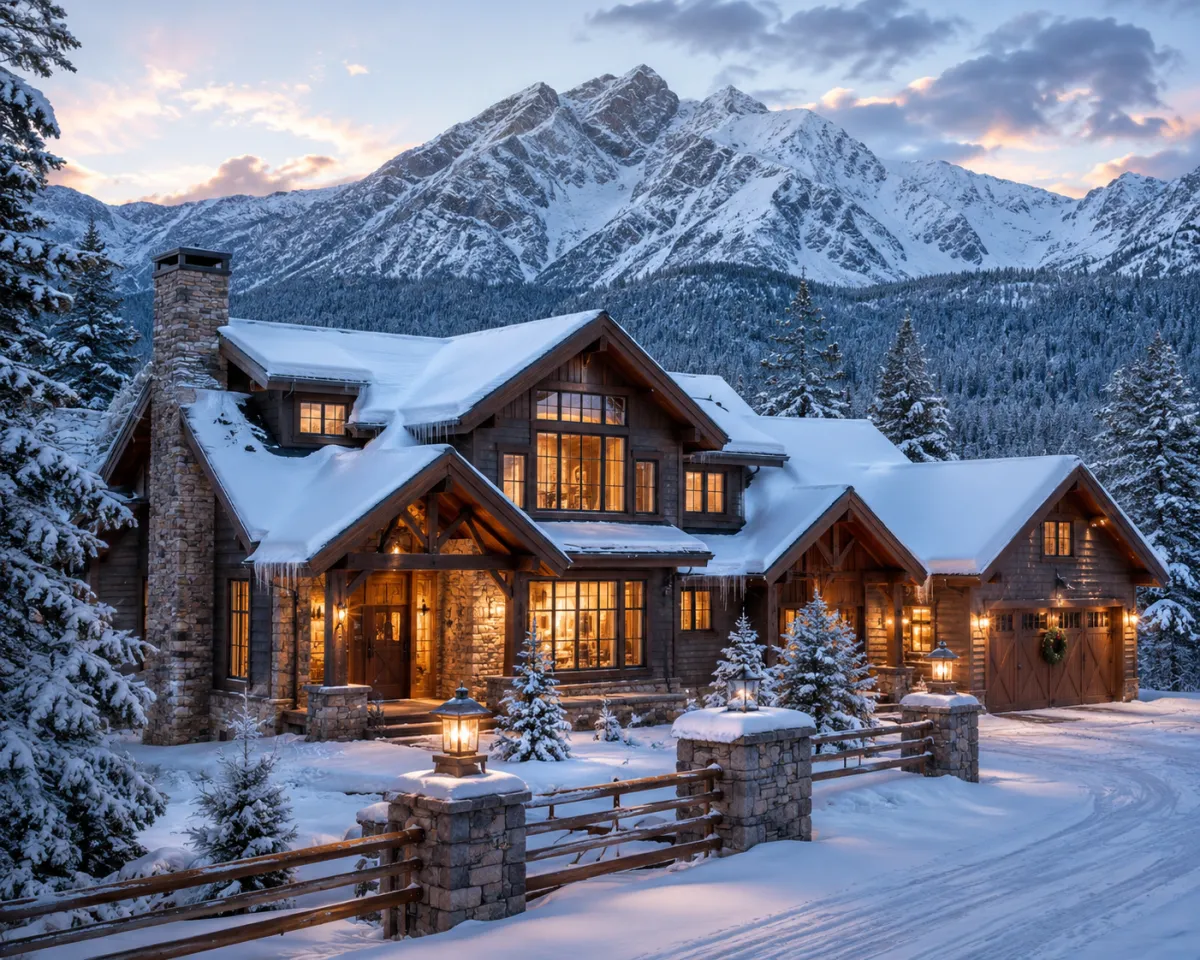
Is Buying a Home in Montana During Winter a Good Idea?
The buyers who shop in the cold see the valley honestly, and often pay less for it.
Waiting for spring feels like the sensible move. The roads are icy, the days are short, and half the valley seems to be hibernating. But if you are deciding whether to house-hunt through a Gallatin Valley winter or hold off until March, it is worth knowing what winter actually does to prices, what a cold-weather showing reveals that a June showing cannot, and what the snow hides.
The short version: winter is not the wrong season to buy here. For a prepared buyer, it may be the smartest one.
Is Buying a Home in Montana During Winter a Good Idea?
For a buyer who is financed, decisive, and willing to work with thinner inventory, winter is a genuinely good time to buy in Montana. National sales data shows buyers pay the smallest premiums in late fall and winter, sellers who list in the cold months tend to be motivated, and a winter showing tests a home in ways summer never will.
The tradeoff is selection. Fewer homes come on the market between November and February, so you are choosing from a smaller pool. Whether that pool contains your home is partly luck. But the buyers who stay in the game through winter often end up with better terms than the crowd that shows up in April, because they were negotiating when almost nobody else was.
What Do Buyers Actually Save by Shopping in Winter?
Nationally, the numbers are not subtle. ATTOM, a property data firm that analyzed millions of home sales, found that buyers who closed on December 24 paid just a 3.8 percent premium above automated market value, the lowest of any day in the year, compared with a 14.0 percent premium on May 27, the highest. By month, October carries the lowest buyer premium at 7.0 percent, followed by November at 7.2 percent, while spring listings command the richest prices.
Two honest caveats. First, that is national data from ATTOM's 2025 analysis, and the Gallatin Valley is a small market where a handful of high-end sales can swing any monthly number. Second, a premium above market value is not the same as a discount off list price. What the data reliably shows is a pattern, not a promise: the competitive pressure that pushes prices up in spring largely goes quiet in winter.
What that pattern looks like on the ground in Manhattan, Belgrade, or Three Forks is simpler. Fewer buyers touring. Fewer competing offers. Sellers who have been sitting since fall watching the plow go by, wondering when the next showing request will come. That is a very different conversation than a spring Saturday with three offers due by Monday.
| Factor | Winter (roughly November to February) | Spring (roughly March to June) |
|---|---|---|
| Buyer competition | Light. Many buyers pause until spring | Heavy. The largest buyer pool of the year |
| National pricing premium (ATTOM, 2025) | Lowest of the year. 7.0 to 7.2 percent in October and November, 3.8 percent on December 24 | Highest of the year. Up to 14.0 percent in late May |
| Inventory | Thin. Fewer new listings each week | Deep. New listings arrive weekly |
| What a showing reveals | Furnace under load, drafts, ice dams, plowing reality, winter access | Landscaping, roof surface, drainage, lot condition |
| What stays hidden | Roof condition, grading, yard, septic components under snow | How the home performs in real cold |
| Seller posture | Often motivated. Listing in December usually has a reason | Often patient. Spring sellers can wait for the next offer |
Why Are Winter Sellers Often More Motivated?
A home listed in the Gallatin Valley in December is rarely there by accident. The common patterns are a job transfer that will not wait for spring, an estate that needs to be settled, a seller who already closed on their next place, or a listing that did not move during the summer and is still waiting for its buyer. None of that guarantees a deal, but each one changes the seller's math.
Winter also concentrates attention. When showings are scarce, a single serious, well-prepared offer carries more weight than the same offer would in May. Even in the current market, where for-sale signs have been staying on Bozeman lawns for weeks or months, as Montana Free Press put it in April 2026, winter adds another layer of leverage on top of an already balanced market. Sellers know the next offer might not arrive until the thaw.
That leverage shows up less in headline price and more in terms. Inspection repairs actually getting done. Closing cost help. A flexible possession date. The quiet concessions that are hard to win in a bidding war become ordinary asks in January.
What Does a Montana Winter Show You That Summer Hides?
A January showing is the most honest look you will ever get at a Gallatin Valley home. Summer flatters every house. Winter interrogates it. Walking into a home when it is well below freezing outside tells you, within minutes, things a summer buyer has to take on faith.
The furnace is running under real load, not idling. You can feel whether the bedrooms over the garage stay warm, whether the windows leak cold, whether the basement holds its temperature. Ask when the heating system was last serviced and watch how it keeps up, because you are seeing it do its actual job.
The roofline tells its own story. Ice dams, the thick ridges of ice that build at the eaves, form when heat escaping the house melts rooftop snow that refreezes at the cold edge. The University of Minnesota Extension explains the mechanism plainly: ice dams need snow on the roof plus upper roof surfaces warmed above 32 degrees by heat loss. Big icicles and ice ridges on a home you are touring are not decoration. They are usually a sign the attic is leaking heat, and they can force water up under shingles and into ceilings.
Winter also shows you access, which matters more in this valley than most buyers expect. You learn whether the county plows the road or the neighborhood does, how the driveway grade handles ice, and how long the last quarter mile takes after a storm. On many subdivision and rural roads around the valley, plowing is handled by an owners association rather than the county, a detail worth understanding before you buy. Our guide to how HOAs handle roads and plowing in the Gallatin Valley covers who is responsible for what.
And winter is radon season in the best way. Montana's geology makes elevated radon common here. The Montana Department of Environmental Quality reports that about half of Montana homes tested come back at or above the EPA action level of 4.0 picocuries per liter. Short-term radon tests require closed-house conditions, which DEQ describes as keeping the house closed up as if it were the winter heating season. In January, those are simply the conditions the house is already in, which makes a winter purchase the natural moment to get a meaningful radon number. Radon is one of several add-on tests worth considering, and our Montana home inspection guide walks through the full list.
What Can Snow Hide, and How Do You Work Around It?
Snow cover conceals real information: the condition of the roof surface, the gutters, the grading around the foundation, the state of the yard and fences, where the septic tank lids and drainfield sit, and how the lot drains in a hard spring melt. Pretending otherwise would be bad advice. The workarounds are straightforward, and a careful winter buyer uses all of them.
Ask for summer photos. Most listings, and most sellers, have them, and they fill in what the snow is covering. Read the seller's property disclosure closely, and ask direct questions about roof age, past ice damming, spring drainage, and septic maintenance. Have your inspector go as far as conditions safely allow, and get bids or records for anything that cannot be fully evaluated until the melt. Your agent can also structure the offer so that items snow makes impossible to inspect are addressed rather than ignored. How to handle that in writing is a conversation for your agent, and where it touches contract law, an attorney.
None of this is exotic. It is ordinary due diligence, adjusted for the season. The buyers who get burned by winter purchases are usually the ones who skipped those steps, not the ones who bought in January.
What Are the Honest Drawbacks of Buying in Winter?
Thin inventory is the real one. If three homes fit your budget and none of them fits your life, winter cannot fix that, and stretching to make the wrong house work is a worse outcome than waiting. The discipline is to let winter reward patience, not force a settle.
The practical frictions are minor but real. Showings compress into short daylight hours. Touring acreage in a foot of snow tells you little about the land itself. Moving trucks and icy driveways are a poor combination, though movers' calendars tend to be far more open in winter than in June. And a few due-diligence items, like a full septic evaluation or a close roof inspection, may need a follow-up once the snow is gone.
Winter in the valley is also simply a commitment. Cold snaps below zero and months of snow are part of the deal, and seeing a home in that season is seeing the truth of it. If you want the fuller picture of what the cold months are like to live in, our post on what Bozeman is like year-round does not sugarcoat it.
How Does the Gallatin Valley Market Look Heading Into Winter?
The market a winter buyer steps into right now is balanced, not frenzied. Per Montana Free Press reporting on Big Sky MLS data, the median Bozeman single-family home sold for $715,000 in February 2026, essentially flat year over year, with condos at a $480,000 median, down 4.9 percent. Single-family inventory sat at 3.7 months of supply and condos at 6.2 months, both a long way from the shortages of a few years ago. Nearly 40 percent of single-family sales in the greater Bozeman area, excluding Belgrade, topped $1 million over the prior six months, which is a reminder that the headline median blends a very top-heavy mix.
Borrowing costs are the other half of the picture. As of mid-July 2026, Freddie Mac's weekly survey put the average 30-year fixed rate at 6.55 percent. Rates will move between now and whenever you buy, so treat any figure, including that one, as a snapshot to verify with your lender rather than a plan.
Put together, a buyer heading into this winter faces softer competition than any spring shopper will see, in a market that was already giving buyers room to negotiate. Whether this particular season is your moment depends on your own timeline and finances more than the calendar. For the fuller market picture, our post on whether now is a good time to buy in the Gallatin Valley goes deeper on the numbers.
Frequently Asked Questions
Is winter a good time to buy a house in Montana?
For prepared buyers, yes. Winter brings fewer competing buyers, sellers who usually have a concrete reason for listing in the cold months, and showings that test the furnace, windows, and road access under real conditions. The main limitation is thinner inventory, so winter rewards buyers who are patient and financed rather than in a hurry.
Are home prices really lower in winter?
National data points that way. ATTOM's 2025 analysis found buyers paid the smallest monthly premiums above market value in October and November, with the single lowest-premium day falling on December 24, and the largest premiums in late spring. In a small market like the Gallatin Valley the effect shows up less in list prices and more in negotiating room on repairs, credits, and terms.
Can you get a home inspection during a Montana winter?
Yes. Inspectors work year-round, and winter is an excellent time to evaluate the heating system, insulation, and drafts because the home is under real load. Snow does limit roof, grading, and septic evaluation, so winter buyers often pair the inspection with summer photos, seller records, and follow-up items for after the melt.
Is winter a good time to test for radon?
It is the natural time. Short-term radon tests require closed-house conditions, which Montana DEQ describes as keeping the home closed up as if it were the winter heating season. In winter, the house is already living that way. With about half of tested Montana homes at or above the EPA action level, the test is worth doing in any season.
What should I ask for when snow covers the roof and yard?
Ask for summer listing photos, roof age and repair records, any history of ice damming, and septic pumping and maintenance records. Read the seller's disclosure carefully and have your inspector evaluate everything conditions safely allow. Your agent can help structure the offer so snow-hidden items get addressed rather than skipped.
Do winter sellers negotiate more?
Often, yes. A December listing usually has a reason behind it, such as a relocation, an estate, or a purchase that already closed. With fewer buyers touring, a single serious offer carries more weight, and concessions that vanish in a spring bidding war, like repair work or closing cost help, come back into reach.
Is there enough winter inventory in the Gallatin Valley to bother looking?
There are always homes for sale through the winter in Bozeman, Belgrade, Manhattan, and Three Forks, just fewer of them. Recent seasons have carried more standing inventory than the valley saw during the shortage years, which means winter shoppers have real choices, though less variety than April delivers.
Should I just wait until spring instead?
Waiting is reasonable if nothing on the winter market fits, and wrong if the right home is sitting there with no competition. Spring brings more choices and more rivals for each of them. A sound approach is to shop through winter with full preparation and let the market, not the calendar, decide.
This article is general information, not legal, tax, or accounting advice. Nancy Clark and AmeriMont Broker Group are not a law firm or an accounting firm, and nothing here should be treated as advice from one. Laws, tax rules, and programs change, and they vary by state and by situation. Before acting on anything covered here, consult a licensed attorney and/or a certified public accountant in your state for current guidance on your specific circumstances.
Nancy Clark is the Broker and Owner of AmeriMont Broker Group, serving Manhattan, Amsterdam, Churchill, and communities across southwest Montana. With more than $135 million in closed sales and over a decade of experience in Montana real estate, Nancy brings the care of a neighbor and the skill of a seasoned professional to every transaction. Reach her at [email protected] or visit nancyclarkbroker.com.
Nancy Clark
Broker/Owner, AmeriMont Broker Group
Manhattan, Montana
[email protected]
nancyclarkbroker.com


