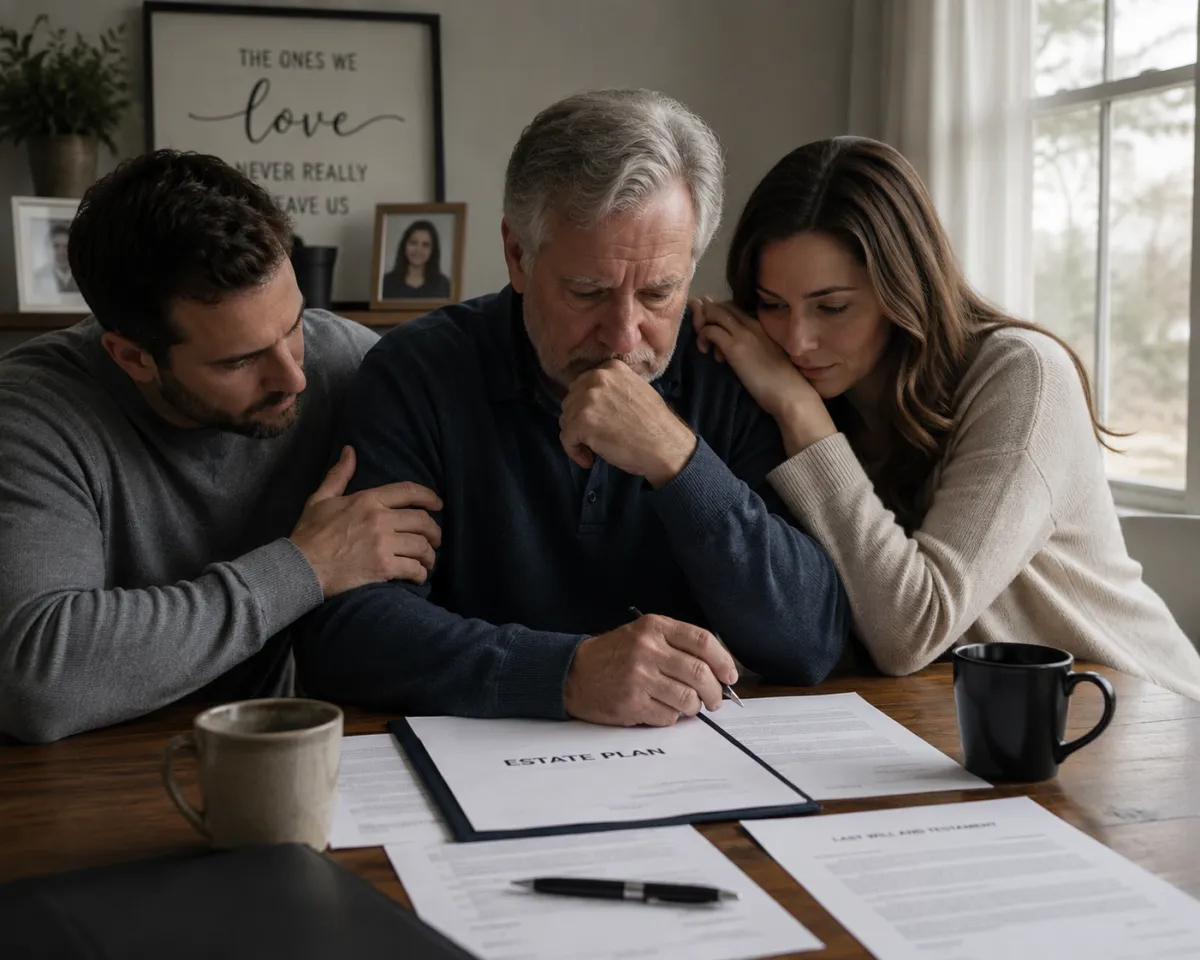
A Guide to Buying a Home in Montana After Losing a Spouse
The money, the timing, and the quiet decisions that come after, from someone who has walked clients through them.
Losing a husband or wife rearranges everything, including where you live. If you are a widow or widower in the Gallatin Valley wondering whether to sell the home you shared, whether you can buy something smaller, and how any of it works on one income, this is for you. Here is what actually changes financially, what the tax rules give you, and why the timing matters more than most people are told.
Should you buy a home right after losing your spouse?
For most people, no, not right away. The months after a death are the wrong time to sign the biggest financial document of your life. Handle what cannot wait, keep the bills paid, and give yourself room to grieve before you sell the family home or buy a new one.
That said, the old advice to "make no decisions for a full year" is too blunt. Some things cannot wait a year, and a few genuinely should not. FINRA's guidance for surviving spouses splits it the way seasoned brokers do: take care of cash flow, funeral costs, and safety first, then postpone the life-altering choices, like selling the house or moving across the valley, until your head is clear and you can see the whole picture.
What I notice with the widows and widowers who call is that the pressure to move often comes from other people. A grown child in Belgrade wants Mom closer. A friend says the big house is too much. Those voices mean well. The decision is still yours, and it keeps better when it is not rushed.
How does losing a spouse change what you can afford?
Your income and your household picture both change at once. One earner is often gone, but new pieces can appear: Social Security survivor benefits, life insurance, a pension survivor option, and sometimes veteran survivor benefits. What you can afford depends on how those pieces add up, not on the old two-income math.
Social Security is usually the first question. A surviving spouse who was married at least nine months can receive survivor benefits worth 71.5% to 100% of the late spouse's benefit, depending on the age you claim, from as early as 60 (50 if you are disabled, any age if you care for the couple's young child). There is also a one-time $255 death payment, and in 2026 an earnings limit of $24,480 if you claim before full retirement age.
Life insurance, if it exists, often becomes the cushion that makes a smaller, paid-for home possible. Before you spend it, though, look at the full monthly reality: property taxes, insurance, upkeep, and whether your income now covers them alone. A house you can buy is not always a house you can carry.
What happens to the home you already own?
It depends on how the title was held. If you and your spouse owned the home in joint tenancy with right of survivorship, which is common for Montana couples, the home passes to you automatically, and you only need to record proof of death. If it was titled in your spouse's name alone, it likely has to go through probate before you can sell.
Montana makes the survivorship path simple. With joint tenancy or a recorded transfer on death deed, governed by Montana Code Annotated 72-6-401 through 72-6-418, the property moves to the survivor without probate. Joint tenancy takes priority over a transfer on death deed, so if you held the home together, that is almost always how it passes.
Sort the title out before you list or buy. You cannot sell a home you do not yet legally hold, and a Gallatin County closing will stall if the deed still reads two names and one of them belongs to someone who has passed. A short call to the county clerk and recorder, or to a title company, tells you exactly what needs recording. This is the same cleanup that comes up when settling a parent's home after they pass, and the steps rhyme.
Will you owe capital gains tax if you sell the home you shared?
Often not, if you sell within two years. A surviving spouse who has not remarried can exclude up to $500,000 of gain on the sale of the primary home, the full married amount, as long as the sale happens within two years of the date of death. After that window, the exclusion drops to $250,000.
This is one of the few deadlines in this whole process worth circling. The Section 121 exclusion normally gives a single person $250,000 of tax-free gain and a married couple $500,000. The law keeps the $500,000 amount available to a surviving spouse for two years after the death, provided you have not remarried and the couple met the ownership and use tests before the death. On a long-held Gallatin Valley home that has doubled in value, that difference can be real money.
There is a second break working in your favor: the step-up in basis. When your spouse died, their share of the home was revalued to its fair market value on that date. Montana is a common-law state, not a community property state, so only the deceased spouse's half of the home steps up, while your half keeps its original cost. Even a half step-up sharply cuts the taxable gain, and stacked with the $500,000 exclusion, many surviving spouses who sell within the window owe little or nothing. Confirm the numbers with a CPA, because your basis and the sale price drive the answer. The mechanics here overlap a lot with selling a home you have lived in for decades.
Can you qualify for a mortgage on one income?
Often, yes, because survivor income counts. Lenders can use Social Security survivor benefits, survivor pension income, and VA survivor compensation as qualifying income, the same as a paycheck, as long as it is documented and expected to continue. Whether you need a mortgage at all depends on how much home equity and insurance you are bringing to the next purchase.
Many surviving spouses in the valley end up buying with a large cash down payment from the sale of the marital home, which shrinks the loan and the monthly payment. If you do need financing, the lender looks at your debt-to-income ratio using your new, documented income. Survivor benefits, retirement distributions, and any part-time work all count. Get a full pre-approval before you shop, so you are looking at homes you can actually carry, not homes you could carry two incomes ago. Whether to downsize or stay put is worth thinking through on its own, and I walk through that in the downsizing decision for empty nesters.
What VA benefits can a surviving military spouse use?
If your spouse was a veteran, you may be able to buy with a VA loan of your own. The surviving spouse of a service member who died in service or from a service-connected disability, and who has not remarried before age 57, can qualify for a VA home loan with no down payment, no monthly mortgage insurance, and no VA funding fee.
That funding fee waiver alone saves 1.25% to 3.3% of the loan amount compared to other buyers. To use the benefit, you request a Certificate of Eligibility, which for surviving spouses runs through VA rather than the online system, and your lender documents the exemption before closing. If you receive Dependency and Indemnity Compensation, that income also counts toward qualifying. Veteran buyers and their families are a group I work with closely, and the full VA loan process in Montana covers the appraisal and eligibility details in depth.
What property tax help exists for a widow or widower in Gallatin County?
Two Montana programs can lower your bill, and going from two incomes to one may now qualify you. The Property Tax Assistance Program reduces your rate on the first $418,000 of your home's value, and the Elderly Homeowner Credit returns up to $1,150 to homeowners 62 and older. Both are worth checking the year after a loss, because your income likely dropped.
The Property Tax Assistance Program cuts your rate by 30%, 50%, or 80% depending on income. For 2026, that means a 2024 adjusted gross income under $29,037 for a single filer. The Elderly Homeowner Credit is a refundable credit for those 62 and up with household income under $45,000, and you can claim it even if you do not otherwise file a return. Both have an April 15 deadline, so put it on the calendar. A wider look at property taxes across Gallatin County shows how the newer homestead rate fits with these programs.
Here is how the main financial windows line up, so nothing quietly expires while you are grieving.
| Window or Deadline | What It Gives You | When It Applies |
|---|---|---|
| Section 121 home sale exclusion | Up to $500,000 of gain tax-free (vs. $250,000) | Sell within 2 years of the date of death, unmarried |
| Step-up in basis | Deceased spouse's half revalued to date-of-death value | Applies automatically; use it whenever you sell |
| Social Security survivor benefit | 71.5% to 100% of spouse's benefit | From age 60 (50 if disabled); married 9+ months |
| VA surviving spouse loan | No down payment, no funding fee | Unremarried, or remarried at 57+ |
| Property tax relief (PTAP + Elderly Credit) | Reduced rate plus up to $1,150 credit | Apply by April 15 each year |
Where do surviving spouses tend to land in the Gallatin Valley?
Usually somewhere smaller, easier to keep, and closer to family or a hospital. That often means trading a large house on acreage for a single-level home or a low-maintenance condo in Belgrade, Manhattan, or Bozeman. The county median sits near $800,000 in 2026, but the valley still has more reachable options if you know where to look.
According to the 2026 Gallatin Valley Housing Report from the Southwest Montana Association of Realtors, the Gallatin County median is roughly $800,000, about double what it was in 2019. Belgrade runs just under $600,000, and Three Forks sits near $450,000, which makes both worth a serious look for a surviving spouse buying on one income. A single-level home matters more than square footage now, and so does being ten minutes from Bozeman Health or from a daughter in Four Corners rather than forty.
There is no rush to get it perfect. Renting for a season near where you think you want to be is a completely valid first step, and it beats buying twice. The valley is not going anywhere, and neither is the right home.
Frequently Asked Questions
How long after losing my spouse should I wait to buy or sell a home?
Handle urgent items like bills and funeral costs right away, but wait on life-altering moves like selling the family home until you can think clearly, often several months to a year. Some decisions cannot be postponed a full year, so weigh each one rather than following a single rule.
How much capital gains tax will I owe if I sell our home after my spouse dies?
Likely little or none if you sell within two years. A surviving spouse can exclude up to $500,000 of gain during that window, and your spouse's half of the home was stepped up to its date-of-death value, which further reduces the taxable gain. Confirm your basis with a CPA.
Does the $500,000 home sale exclusion still apply after my spouse passes?
Yes, for two years from the date of death, as long as you have not remarried and the couple met the ownership and use tests before the death. After two years, the exclusion drops to the single-person amount of $250,000.
Can I qualify for a mortgage using Social Security survivor benefits?
Yes. Lenders can count documented survivor benefits, survivor pensions, and VA survivor compensation as qualifying income, the same as employment income, as long as it is expected to continue. Get a full pre-approval so you shop within your new budget.
What happens to our home's title when my spouse dies in Montana?
If you held the home in joint tenancy with right of survivorship or under a recorded transfer on death deed, it passes to you without probate once you record proof of death. If the home was titled in your spouse's name alone, it usually must go through probate before you can sell.
Can I use a VA loan as the surviving spouse of a veteran?
Often yes. The unremarried surviving spouse of a veteran who died in service or from a service-connected disability can qualify for a VA loan with no down payment and no funding fee. Request a Certificate of Eligibility, and your lender documents the exemption before closing.
What property tax help can a widow or widower get in Gallatin County?
Two programs can help: the Property Tax Assistance Program reduces your rate on the first $418,000 of value based on income, and the Elderly Homeowner Credit returns up to $1,150 to homeowners 62 and older. Both have an April 15 deadline, and a drop to one income may newly qualify you.
Is it better to rent for a while before buying after losing my spouse?
For many people, yes. Renting near the area you think you want lets you test the fit without committing, and it avoids the cost and stress of buying twice. It is a steady first step, especially if you are also deciding whether to move closer to family.
This article is general information from a real estate broker, not legal, tax, or financial advice. Nancy Clark is not an attorney or accountant. Tax, benefit, and estate rules are complex and change often. Confirm your own situation with a qualified attorney, CPA, or the relevant agency (such as the IRS, SSA, or VA) before acting.
Nancy Clark is the Broker and Owner of AmeriMont Broker Group, serving Manhattan, Amsterdam, Churchill, and communities across southwest Montana. With more than $135 million in closed sales and over a decade of experience in Montana real estate, Nancy brings the care of a neighbor and the skill of a seasoned professional to every transaction. Reach her at [email protected] or visit nancyclarkbroker.com.
Nancy Clark
Broker/Owner, AmeriMont Broker Group
Manhattan, Montana
[email protected]
nancyclarkbroker.com
Blessed in the Big Sky.


