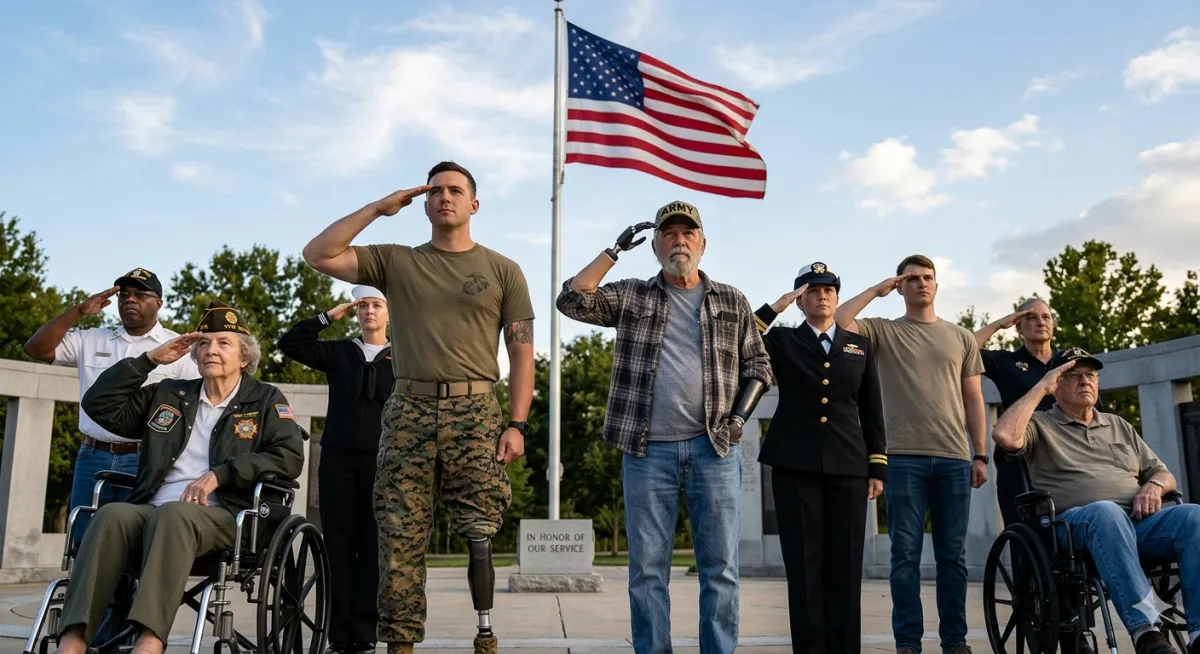
What Should Veterans Know About Buying a Home in Montana?
The VA loan advantages, the funding fee math, the Montana-only programs, and what to watch on rural property.
You served, and now you are looking at putting down roots in Montana. The VA loan you earned is one of the strongest financing tools in the country, but it has details that catch people off guard, and Montana adds programs most veterans never hear about. This post is for service members, veterans, and surviving spouses buying in the Gallatin Valley or anywhere in the state, and it lays out the benefits, the costs, and the steps in plain language.
Short answer: A VA loan lets qualified veterans buy with no down payment, no monthly mortgage insurance, and, with full entitlement, no loan limit. The main cost is the VA funding fee, which disabled veterans are exempt from and which became tax deductible in 2026. Montana adds a below-market state loan program and a property tax break for fully disabled veterans. Used well, these stack into one of the best paths to homeownership available anywhere.
What makes a VA loan worth using in Montana?
Three things set it apart. A VA loan requires no down payment, charges no monthly mortgage insurance, and, for veterans with full entitlement, imposes no loan limit. In a state where the Gallatin County median home price now sits near $800,000, the ability to buy without a large cash down payment is a meaningful advantage.
The no-down-payment piece is the headline, and it is real. The VA home loan program does not require a down payment or monthly mortgage insurance, which is the single biggest cost difference between it and a conventional loan. On a conventional loan with less than 20 percent down, private mortgage insurance can add a couple hundred dollars or more to your payment every month. A VA loan does not carry that, so two veterans and non-veterans buying the same house at the same rate can have meaningfully different monthly payments.
The loan-limit point matters more in Montana than people expect. With full entitlement, there is no VA loan limit, and your lender underwrites based on your income, debts, and the home's appraised value rather than a federal cap. The 2026 conforming loan limit in Montana is $832,750, but that figure only comes into play if you have partial entitlement, meaning you already have a VA loan you are still paying on. For most first-time VA buyers with full entitlement, the ceiling is what you can actually afford, not an arbitrary number.
One more strength worth naming: VA loans use a residual income test, which looks at the actual cash you have left after your major monthly obligations. It is one reason VA loans have historically held up well, and it is designed to keep veterans from being approved for a payment that strains them. That care built into the program is, frankly, part of why I like working with veteran buyers on it.
What is the VA funding fee, and who is exempt?
The funding fee is a one-time cost that keeps the program running, and many veterans do not have to pay it at all. For 2026, first-time users pay 2.15 percent of the loan with no down payment, and repeat users pay 3.3 percent. Veterans receiving VA disability compensation at any level are exempt, as are Purple Heart recipients and many surviving spouses.
Here are the actual numbers. According to the VA's 2026 funding fee schedule, a first-time user with no down payment pays 2.15 percent, and a subsequent user pays 3.3 percent. Putting money down lowers it: 5 percent down drops the fee to 1.5 percent, and 10 percent down drops it to 1.25 percent for both first-time and repeat users. On a $500,000 loan, the difference between 2.15 and 3.3 percent is more than $5,000, so whether it is your first use matters.
The exemptions are where a lot of veterans save real money. If you receive VA disability benefits at any rating, 10 percent or higher, you are exempt from the funding fee entirely. The same applies to veterans with a pre-discharge claim rating, to Purple Heart recipients on active duty, and to many surviving spouses of veterans who died in service or from a service-connected disability. If you fall into one of these groups, confirm the exemption with your lender so it is applied correctly, because it should never appear on your closing statement.
There is also good news new for 2026: the VA funding fee is now tax deductible, which gives veterans who do pay it a way to offset some of the cost. Talk to your tax professional about how that applies to your situation.
Is there a Montana-specific home loan program for veterans?
Yes, and it is one of the best-kept secrets in the state. The Montana Veterans' Home Loan Mortgage Program offers a 30-year fixed-rate first mortgage at an interest rate 1 percent below the Montana Board of Housing's regular bond loan rate. It is open to Montana residents who serve or have served in the National Guard, armed forces, or reserves.
This program is separate from the federal VA loan, and many veterans have never heard of it. Run through the Montana Department of Commerce, it provides first mortgage funds at a full percentage point below the Board of Housing's standard bond rate, which over a 30-year loan adds up to real money. There are no income, asset, or purchase price limits, though the program does carry a loan limit, and funds come from the Montana Housing Trust.
A note on how it has evolved: House Bill 924, passed in 2025, moved the program's funding into the newly established Montana Housing Trust under the Department of Revenue, which kept it on stable footing going forward. The practical takeaway for you is simple. When you talk to a lender, ask specifically whether you qualify for the Montana Veterans' Home Loan Mortgage Program, because a rate 1 percent below market is worth asking about, and not every loan officer brings it up unprompted.
For a fuller picture of how VA, FHA, USDA, and conventional loans compare for Montana buyers, our guide to financing options for first-time buyers walks through the tradeoffs side by side.
What property tax help do disabled veterans get in Montana?
A significant break, if you are rated 100 percent disabled. The Montana Disabled Veterans Assistance Program (MDV) reduces the property tax rate on the home of a veteran with a 100 percent service-connected disability, or their unmarried surviving spouse. Depending on marital status and income, the reduction is 100, 80, 70, or 50 percent of the normal rate.
This is one of the more substantial property tax benefits in the state, and it is worth understanding precisely. The MDV program requires a 100 percent disability rating tied to service, and the size of the reduction scales with your income and filing status. For a qualifying veteran at the top tier, the reduction can eliminate the normal residential tax rate on the home and one acre of land entirely. For homes on agricultural or forest land, the benefit applies to the house and a one-acre homesite.
You apply through the Montana Department of Revenue by April 15, and you need to meet the income and occupancy requirements each year, though once you are approved and continue living in the home, your application stays active. Montana has also moved recently to expand property tax relief for disabled veterans, so if you are rated below 100 percent, it is worth checking current eligibility rather than assuming you do not qualify. For the broader property tax picture in the county, our Gallatin County property tax guide covers the 2026 changes.
What should veterans know about buying rural property in Montana with a VA loan?
The VA appraisal is stricter than a standard one, and that matters most on rural land. Beyond setting value, the VA appraisal checks the home against Minimum Property Requirements, which cover safety, soundness, and sanitation. On a rural Gallatin Valley property with a well, septic system, or older outbuildings, those requirements can surface issues a city home never would.
This is the part where my local knowledge earns its keep, because rural Montana homes have features that VA appraisers look at closely. A private well may need a water quality test. A septic system needs to be functional and properly sited. The VA wants the home to be safe, structurally sound, and sanitary, and a property with a failing roof, exposed wiring, or a questionable water source can hit a snag in the appraisal. None of this means you cannot buy rural land with a VA loan. It means you want to know about these systems before you write an offer, not after.
Access matters too. The VA generally wants a property to have safe, year-round access by road, which in rural Montana can mean confirming who maintains the road to the house and whether legal access is recorded. These are the kinds of details that are easy to miss when you are focused on the view and the acreage, and they are exactly what I walk veteran buyers through before we get too far down the road on a specific property. A little diligence up front keeps the appraisal from becoming the place a deal falls apart.
How do you actually start the VA home buying process in Montana?
Start with your Certificate of Eligibility and a VA-savvy lender, in that order. The Certificate of Eligibility, or COE, proves to lenders that you qualify for the VA benefit. Pair it with a lender who closes VA loans regularly, get pre-approved, and only then start seriously touring homes. Doing it in that sequence saves weeks and a lot of frustration.
The COE is the document that confirms your entitlement, and you can request it through the VA, often in minutes online, or have your lender pull it for you. Once you have it, the most important choice you make is your lender. Not every loan officer is fluent in VA loans, and the difference shows up in the details: whether they catch your funding fee exemption, whether they know to ask about the Montana Veterans' Home Loan Mortgage Program, whether they understand how a VA appraisal handles a rural well. Ask a prospective lender how many VA loans they closed last year. The answer tells you a lot.
After pre-approval, the home search is where having an agent who knows VA loans and knows the local property types matters. I have helped veteran buyers through this enough to know where the friction usually shows up, and most of it is avoidable with preparation. If you are also weighing where in the valley to settle for the long term, the retirement guide for the Gallatin Valley covers the towns, costs, and healthcare access that matter for the years ahead.
What are the honest tradeoffs of using a VA loan?
A few, and they are worth knowing. The funding fee is real money if you are not exempt. The VA appraisal can be stricter and occasionally slower than a conventional one. And in past hot markets, some sellers wrongly favored other offers. None of these outweigh the benefits for most veterans, but you should go in clear-eyed.
The funding fee is the most concrete tradeoff. For a non-exempt repeat user at 3.3 percent, it is a meaningful cost, though it can be rolled into the loan and is now tax deductible. The stricter appraisal is the second. It protects you, but on a property with deferred maintenance it can require repairs before closing, which takes time and sometimes negotiation with the seller.
The seller-perception issue deserves an honest word, and here the timing is in your favor. During the frenzied market of a few years ago, some sellers steered toward offers they imagined would close faster. In the cooler 2026 Gallatin Valley market, where homes are taking longer to sell and buyers have regained negotiating power, that bias has faded and veteran buyers have more room than they did. The VA benefit you earned is a strength, not a liability. Used with a good lender and an agent who knows the local ground, it is one of the clearest paths to owning a home in Montana, and helping veterans walk it is some of the work I value most.
Nancy Clark
Broker/Owner, AmeriMont Broker Group
Manhattan, Montana
[email protected]
nancyclarkbroker.com
Nancy Clark is the Broker and Owner of AmeriMont Broker Group, serving Manhattan, Amsterdam, Churchill, and communities across southwest Montana. With more than $135 million in closed sales and over a decade of experience in Montana real estate, Nancy brings the care of a neighbor and the skill of a seasoned professional to every transaction. Reach her at [email protected] or visit nancyclarkbroker.com.
Frequently Asked Questions
Do veterans really pay no down payment on a home in Montana?
Yes, in most cases. A VA loan requires no down payment for eligible veterans with full entitlement, and it carries no monthly mortgage insurance. That is the program's biggest advantage over conventional financing, especially in a market where the Gallatin County median home price sits near $800,000 and a 20 percent down payment would be substantial.
How much is the VA funding fee in 2026?
For a first-time user with no down payment, the funding fee is 2.15 percent of the loan. Repeat users pay 3.3 percent. Putting 5 percent down lowers it to 1.5 percent, and 10 percent down to 1.25 percent. Veterans receiving VA disability compensation at any rating are exempt from the fee entirely.
Is the VA funding fee tax deductible?
Starting in 2026, yes. The VA funding fee became tax deductible, giving veterans who do pay it a way to offset part of the cost. This is new, so confirm how it applies to your return with a tax professional, and remember that disabled veterans and many surviving spouses are exempt from the fee in the first place.
What is the Montana Veterans' Home Loan Mortgage Program?
It is a state program offering a 30-year fixed-rate first mortgage at 1 percent below the Montana Board of Housing's regular bond rate, for residents who serve or have served in the National Guard, armed forces, or reserves. There are no income or purchase price limits, though it carries a loan limit. Ask your lender about it directly.
What property tax break do disabled veterans get in Montana?
The Montana Disabled Veterans Assistance Program (MDV) reduces the property tax rate on the home of a veteran with a 100 percent service-connected disability, or their unmarried surviving spouse. The reduction is 100, 80, 70, or 50 percent depending on marital status and income. Apply through the Department of Revenue by April 15.
Can you use a VA loan to buy rural land in Montana?
Yes, but the VA appraisal checks the property against Minimum Property Requirements for safety, soundness, and sanitation. On rural parcels, that means the well, septic, roof, and legal road access all get scrutiny. Know the condition of those systems before writing an offer so the appraisal does not derail the purchase.
Is there a VA loan limit in Montana?
Not for veterans with full entitlement. With full entitlement, the VA imposes no loan limit, and your lender underwrites based on income, debts, and the home's appraised value. The 2026 Montana conforming limit of $832,750 only matters if you have partial entitlement from an existing VA loan you are still repaying.
How do I start the VA home buying process?
Request your Certificate of Eligibility, choose a lender who closes VA loans regularly, and get pre-approved before touring homes seriously. Then work with an agent who understands VA loans and local property types. Doing these steps in order saves time and helps you avoid surprises during the appraisal and closing.


