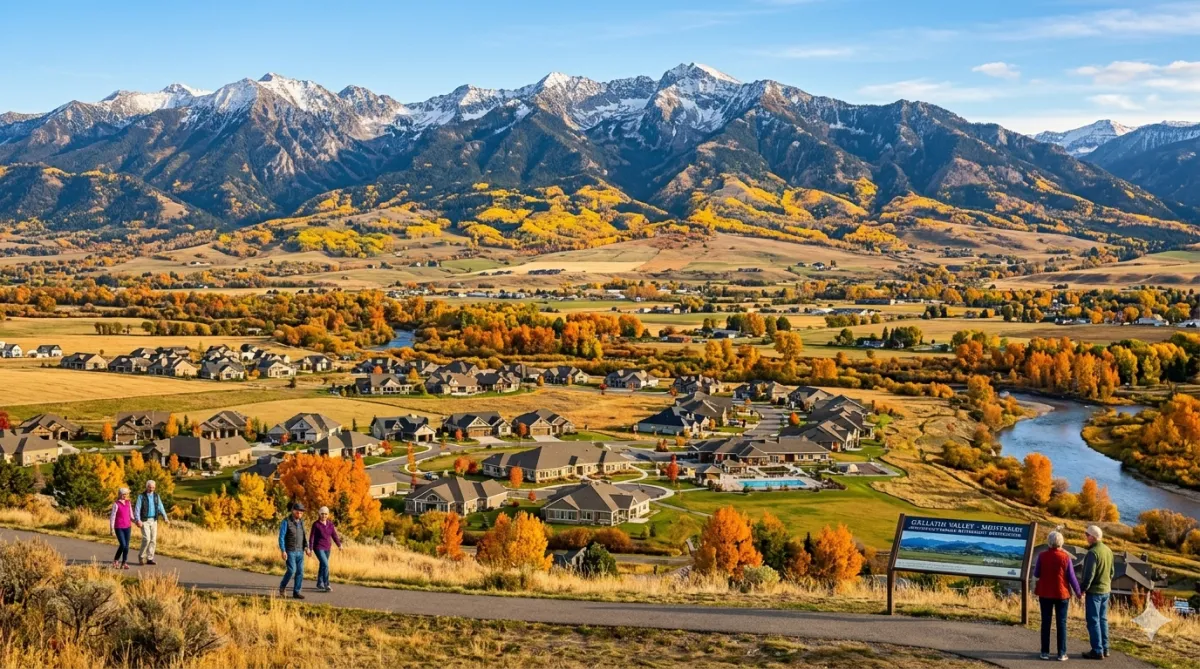
What Is West Bozeman Like for Homebuyers in 2026?
A neighborly tour of the fastest-changing side of town, from the trout lake in Valley West to the fields that are still becoming streets.
The short answer: west Bozeman is where much of the city's new housing has been built over the past two decades, and where much of it is still going up. West of 19th Avenue you will find newer neighborhoods, an 80-acre sports park, Bozeman's second high school, and more attainable entry points than the historic core, traded against ongoing construction and near-universal HOAs.
Ask ten Bozeman locals about the west side and you will hear ten versions of the same sentence: "It did not look like this ten years ago." That is not a complaint or a compliment, just a fact. The west side is where Bozeman has been growing, and understanding it neighborhood by neighborhood is the difference between buying a home and buying a surprise.
Nancy Clark has walked buyers through west-side homes since before some of these streets had names. Here is the honest picture.
Where Does West Bozeman Actually Start?
There is no official boundary, but locals generally mean everything west of 19th Avenue, from Baxter Lane in the north down through the Huffine Lane corridor and into the newest southwest streets near Stucky and Graf, reaching out past Cottonwood Road and Flanders Mill Road. The named neighborhoods inside that stretch include Valley West, Norton Ranch, Baxter Meadows, Gran Cielo, Flanders Mill, Laurel Glen, and Northwest Crossing.
Most of this land was farmland within living memory. The city annexed and platted it in waves, which is why the west side reads as rings of development: neighborhoods from the early 2000s like Valley West and Baxter Meadows sit closest in with mature landscaping, while the newest phases of Northwest Crossing are still pouring foundations near Gallatin High School.
That layered history matters for buyers. A "west Bozeman home" can mean a two-story from 2004 on a treed street with an established HOA, or a townhome finished last month in a subdivision that is still 40 percent open dirt. Both are real options. They live very differently for the first five years.
| Stage of build-out | Neighborhoods | What to expect |
|---|---|---|
| Established (platted early 2000s) | Valley West, Baxter Meadows | Mature landscaping, finished streets, mostly resale homes, long-running HOAs |
| Mid-stage | Norton Ranch, Gran Cielo, Flanders Mill, Laurel Glen | Mix of resale and newer phases, some construction remaining |
| Actively building | Northwest Crossing | New construction and builder inventory, years of build-out ahead |
Why Has the West Side Grown So Fast?
Flat, buildable land is the short version. Bozeman added about 689 residents between July 2024 and July 2025, roughly 1.2 percent growth in a single year, per Montana Free Press reporting, and for two decades the practical place to put those households has been the open ground west of the existing city.
The public investment followed. Voters approved the bond that built Gallatin High School, a $93 million campus on a roughly 70-acre site at Cottonwood and Oak that opened in September 2020 and enrolled about 1,480 students by the 2023-24 school year. The Bozeman Sports Park, an 80-acre complex built out to 14 multipurpose fields with a 2-acre off-leash dog park, sits between Flanders Mill Road and Cottonwood Road. Retail followed the rooftops, anchored by the restaurants and shops at The Market at Ferguson Farm off Huffine Lane.
The pattern is worth naming plainly: schools, parks, and shopping did not precede the west side's growth, they chased it. Buyers today inherit the payoff of that chase. The infrastructure that early west-side buyers waited years for is now simply there.
What Do Homes Cost on the West Side in 2026?
Citywide, Bozeman's single-family homes sold at a median around $715,000 in early 2026, with condos near $480,000, per Montana Free Press's housing report, and homes have been averaging roughly 80 days on market in mid-2026, per Redfin's Bozeman market data. The west side spans a wide band around those numbers: newer townhomes and condos provide the city's more attainable entry points, while larger single-family homes in established subdivisions reach well above the median. Exact pricing varies by neighborhood, phase, property type, and builder, so treat any single figure with caution.
A few patterns hold, though.
First, the west side is where new construction lives, and new construction is where negotiation lives in 2026. Builders with standing inventory respond to offers in ways private sellers often cannot, and the details of what is included (landscaping, fencing, window coverings, appliances) are genuinely negotiable. The current projects and what to watch for in builder contracts are covered in what new developments are going up in Bozeman and Belgrade in 2026.
Second, townhomes and condos do the entry-level work here. Buyers comparing west-side attached homes against the broader market will find the tradeoffs laid out in the best Bozeman neighborhoods for first-time buyers, several of which sit west of 19th.
Third, in a market averaging roughly 80 days on market, with frequent price reductions in recent local reports, west-side sellers of resale homes are competing with builders down the street. That competition is a quiet advantage for buyers who tour both before writing anything.
What Is Daily Life Like West of 19th?
Newer, more open, and organized around parks rather than a downtown. The west side has no Main Street, and it does not pretend to. What it has instead is green space at a scale the historic core cannot match, and errands that stay on that side of town.
The Gallatin County Regional Park off Oak Street is the west side's living room: a dinosaur-themed playground, ponds with a swimming beach, a pump track, a sledding hill, and a dog park, connected by trails that the Gallatin Valley Land Trust helped weave into the city's larger trail network. Valley West wraps around a 5-acre trout-stocked lake with about four miles of internal walking paths. The Sports Park fills weeknights with soccer from spring through fall, and the City of Bozeman's parks system threads smaller parks through nearly every west-side subdivision.
Daily logistics run through the Huffine and Oak corridors: groceries, hardware, restaurants at Ferguson Farm, and the retail cluster near 19th. Most west-side addresses reach downtown in roughly 10 to 20 minutes depending on the hour, and the drive to Belgrade and the airport runs against the heaviest traffic. Town-by-town drive times across the valley are mapped in the Gallatin Valley commute guide.
School logistics deserve one plain sentence: most of the west side is served by Gallatin High School and its feeder schools, but the district adjusts attendance boundaries as the city grows, so confirm any specific address against the Bozeman School District's current school pages rather than assuming.
What Are the Honest Tradeoffs?
Construction is the big one. Buying in a growing area means living in a growing area: framing crews at 7 a.m., dirt lots beside finished homes, and an open field view that may become rooftops. The west side in 2026 is still building, and anyone who needs their surroundings finished should shop the phases that already are.
Name the rest honestly too.
HOAs are nearly universal in west-side subdivisions, and they are doing real work: many maintain parks, trails, and in some cases private streets. That means dues, covenants, and documents worth reading before an offer, not after. Some areas also carry special improvement district (SID) assessments that fund infrastructure and appear on the property tax bill. Ask the title company for a payoff figure on any SID early, because the difference between "paid" and "assumed" belongs in your math.
Character is a preference, not a defect, but it is real. The west side's homes are newer and its trees are younger. Buyers drawn to 1940s bungalows and mature maples will not find them west of Cottonwood, and no amount of square footage substitutes if that is what your heart is set on. The full version of that decision is laid out in downtown Bozeman versus the suburbs.
Traffic is growing with the rooftops. The Huffine and Cottonwood corridors carry more cars every year, and left turns onto the main roads at 8 a.m. take patience that the 2015 version of the west side did not require.
The west side is where Bozeman is still becoming itself. Some buyers love watching a neighborhood grow in around them, and some want streets that finished changing decades ago. Both are right answers, but you want to know which buyer you are before you write an offer.
How Should a Buyer Approach the West Side?
Tour it in layers, and read the paperwork the area generates. The west side rewards buyers who treat the neighborhood's stage of life as part of the property.
- Decide your construction tolerance first. Established (Valley West, Baxter Meadows), mid-stage (Norton Ranch, Gran Cielo, Flanders Mill), and actively building (Northwest Crossing) are three different daily experiences at three different price behaviors. Pick your layer before you pick your house.
- Read the HOA packet before the inspection, not after. Covenants, dues history, reserve funding, and what the HOA actually maintains. Ten pages now beats a surprise assessment later.
- Ask the title company about SIDs on day one. A special improvement district balance changes your effective monthly cost, and it is knowable before you offer.
- Compare new construction against resale on the same street. In 2026 the builders' incentives and the resale sellers' price reductions are competing for the same buyer. You. Make them both show you their best number.
- Check the school boundary for the specific address. The district's boundaries have shifted as the west side has grown. Five minutes on the district site settles it.
- Walk the neighborhood at 6 p.m., not 11 a.m. Construction noise, park life, and the Huffine commute all tell the truth in the evening.
The Bottom Line
West Bozeman is the city's newest half, and it behaves like it: more housing choice and more attainable entry points than the historic core, big parks, a 2020-built high school, and errands that rarely cross 19th, traded against active construction, HOA and SID paperwork, and streets still growing into their trees. None of that is a reason to buy or to pass. It is a set of facts to match against the way your household actually lives. Buyers who know their construction tolerance and read the documents tend to love it here. Buyers who skip those steps are the ones who call two years later wanting out.
Next Steps
If the west side is on your list, drive it twice: once on a weekday evening for the traffic and the parks, once on a Saturday morning for the neighborhood itself. Note which layer of development felt right.
Then reach out to Nancy at [email protected] with the neighborhoods that made your shortlist. She can pull the HOA documents, check the SID picture, and tell you honestly whether the resale down the street beats the builder's model home, or the other way around.
Frequently Asked Questions
Where does west Bozeman start?
There is no official line, but locals generally mean everything west of 19th Avenue, from Baxter Lane south through the Huffine corridor to the newest southwest streets near Stucky and Graf, out past Cottonwood and Flanders Mill roads. The named neighborhoods include Valley West, Norton Ranch, Baxter Meadows, Gran Cielo, Flanders Mill, Laurel Glen, and Northwest Crossing.
What high school serves west Bozeman?
Most west-side addresses are served by Gallatin High School, the $93 million campus at Cottonwood and Oak that opened in September 2020 and enrolled about 1,480 students by 2023-24. Attendance boundaries shift as the district grows, so confirm any specific address on the Bozeman School District site before you buy.
Is new construction still happening on the west side?
Yes, actively. Northwest Crossing near Gallatin High School is the largest current project, with more than 700 residences planned, and several established subdivisions are still completing their final phases. Buyers should expect construction activity in the newest areas for years and choose their neighborhood's stage of build-out deliberately.
What parks are on the west side?
The 80-acre Bozeman Sports Park is built out to 14 multipurpose fields and includes an off-leash dog park. Gallatin County Regional Park off Oak Street adds a dinosaur-themed playground, ponds with a swimming beach, a pump track, and a sledding hill. Valley West has a 5-acre trout-stocked lake, and most subdivisions include smaller city parks and trail connections.
How far is west Bozeman from downtown?
Most west-side addresses reach downtown in roughly 10 to 20 minutes depending on the hour, via the Oak, Babcock, or Huffine corridors. The drive to Belgrade and Bozeman Yellowstone International Airport runs opposite the heaviest flow. Daily errands mostly stay west of 19th thanks to the Huffine retail corridor.
Do west Bozeman homes have HOAs?
Nearly all newer subdivisions do, and many maintain real infrastructure: parks, trails, and sometimes private streets. Dues and covenants vary widely by neighborhood. Read the HOA packet, dues history, and reserve funding before making an offer, and ask what the association actually maintains versus what the city handles.
What is an SID and why does it matter here?
A special improvement district is an assessment that funds infrastructure like roads or sewer and appears on the property tax bill until paid off. Some west-side areas carry them. Ask the title company for the balance and payoff terms early, because an assumed SID changes your true monthly cost.
Is west Bozeman cheaper than downtown Bozeman?
Often on a like-for-like basis, but not automatically. Bozeman's single-family median sale price ran about $715,000 in early 2026, with condos near $480,000, per Montana Free Press, and the west side spans a wide band around those figures: townhomes and condos provide attainable entry points while large newer single-family homes exceed the median. Compare price per square foot and monthly carrying costs, not list price alone.
This article is general information, not legal, tax, or accounting advice. Nancy Clark and AmeriMont Broker Group are not a law firm or an accounting firm, and nothing here should be treated as advice from one. Laws, tax rules, and programs change, and they vary by state and by situation. Before acting on anything covered here, consult a licensed attorney and/or a certified public accountant in your state for current guidance on your specific circumstances.
Nancy Clark is the Broker and Owner of AmeriMont Broker Group, serving Manhattan, Amsterdam, Churchill, and communities across southwest Montana. With more than $135 million in closed sales and over a decade of experience in Montana real estate, Nancy brings the care of a neighbor and the skill of a seasoned professional to every transaction. Reach her at [email protected] or visit nancyclarkbroker.com.
Nancy Clark
Broker/Owner, AmeriMont Broker Group
Manhattan, Montana
[email protected]
nancyclarkbroker.com


