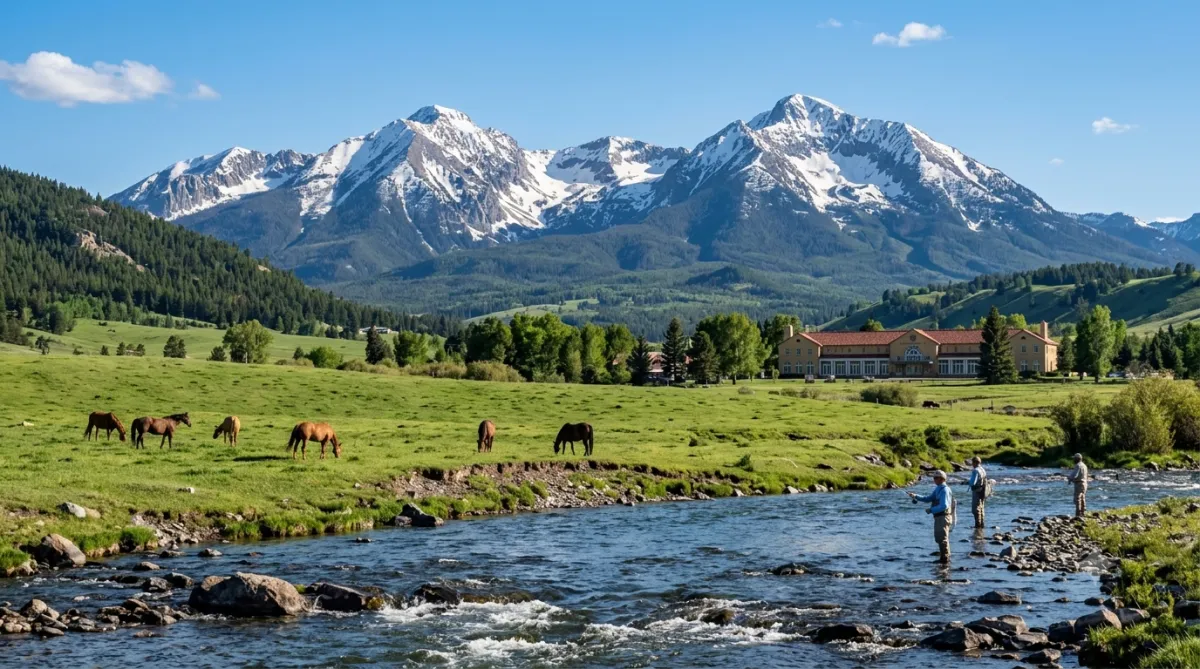
What Is the Gallatin Gateway Area Like for Homebuyers?
The little town at the mouth of the canyon is where the Gallatin Valley ends and the mountains begin, and buying there is a different exercise than buying in town.
Gallatin Gateway confuses more buyers than any other corner of the valley. The market numbers look wild, the mailing addresses cover everything from a historic townsite to canyon acreage, and half the properties run on wells and septic systems that deserve a close look. If you are considering buying there, this guide sorts out what Gateway actually is, what it costs in 2026, and the homework that matters.
Where Is Gallatin Gateway, and What Is It Actually Like?
Gallatin Gateway is a small unincorporated community about 12 miles southwest of Bozeman, sitting where US Highway 191 leaves the open valley and aims into Gallatin Canyon toward Big Sky. The census-designated place counted 967 residents at the 2020 census, but "Gallatin Gateway" as an address covers far more ground than the townsite itself.
The town has a story worth knowing. It started as Salesville, a lumber town, and took its current name in 1927 when the Milwaukee Road railroad opened the Gallatin Gateway Inn, a Spanish-style railroad hotel built to move train passengers onto buses bound for Yellowstone National Park. The Inn still stands along US 191 and has operated in various forms over the decades, a reminder that this crossroads has been the doorway to the mountains for a century.
Day to day, Gateway feels like what it is: a rural community with a school, a bar and grill, a post office, and a lot of open land, fifteen minutes from Bozeman's west-side shopping and forty minutes from a major ski resort. People who choose it are usually choosing space, river access, or the canyon commute, not walkability.
What Does It Cost to Buy in Gallatin Gateway in 2026?
More than almost anywhere else in the county, on paper. As of Redfin's Gallatin County market data in early 2026, Gallatin Gateway commanded one of the highest 12-month median prices in the county, around $1.29 million, ahead of most other communities and in the same range as Big Sky. The countywide median, for comparison, was reported at $658,000 in March 2026, down about 11 percent year over year. These market-site figures update constantly, so re-check them at the time you actually shop.
Those numbers deserve immediate context. Gateway is a very small market, and its monthly medians swing violently. Redfin's Gallatin Gateway page has reported single-month medians as low as the low $700,000s within the past year, alongside year-over-year swings that would be alarming in a bigger market and are mostly noise in this one. A handful of sales in either direction rewrites the whole month.
| Gallatin Gateway | Gallatin County overall | |
|---|---|---|
| 12-month median sale price | ~$1.29 million (per Redfin county data, early 2026) | ~$658,000 (March 2026) |
| Market size | Very small; medians swing hard month to month | Largest market in southwest Montana |
| Typical property | Acreage, river-adjacent, custom and rural homes | Full mix |
| Government | Unincorporated, Gallatin County | County plus incorporated cities |
| Water and sewer | Small district in the core; wells and septic elsewhere | Varies by community |
One month of Gateway data is a coin flip. A year of it says this: the area skews expensive because of what is for sale there, which is mostly land, river frontage, and custom homes rather than starter inventory.
Why Do Gallatin Gateway Market Numbers Look So Strange?
Because the name covers three different markets at once. The Gallatin Gateway mailing area stretches from modest homes in and around the historic townsite, across ranchland and newer acreage subdivisions on the valley floor, and up US 191 toward the canyon, where properties trade at mountain-resort prices. When a data site averages all of that under one label, the result describes nobody's actual shopping experience.
The practical takeaway: ignore the headline median and price the specific property type you want. A home in the townsite, a 10-acre parcel off Gooch Hill, and a river-frontage retreat near the canyon mouth are three different purchases with three different comparable-sale pools. This is a place where working from actual recent comps matters more than anywhere else in the valley. Our breakdown of where to find acreage near Bozeman without Bozeman pricing explains how the per-acre math shifts as you move around the valley's edges.
How Do Water and Sewer Work in Gallatin Gateway?
In most of the Gallatin Gateway mailing area, expect private wells and individual septic systems unless you confirm the property is inside, and actually connected to, the district's service area. The Gallatin Gateway Water and Sewer District, a small government unit formed in 2009, focuses on providing wastewater treatment and disposal for the community core, an area where, according to the district's own planning documents, aging septic systems that predate modern regulations sat close to drinking water wells in shallow, fast-draining gravel soils. Outside that core, properties run on private wells and individual septic systems.
For buyers this means two very different due-diligence paths. In and near the townsite, ask whether the property is inside the district, whether it is connected or eligible, and what fees apply. Everywhere else, order the well test and the septic inspection every time, ask when each system was installed and last serviced, and confirm with your lender whether the loan requires specific tests or documentation. The Gallatin Local Water Quality District publishes plain-language guidance on septic systems and well water testing for exactly this part of the county, and it is worth reading before you write an offer.
Our full guide to well and septic systems for Gallatin Valley buyers covers the testing checklist, the county rules, and the state exempt-well rule changes that took effect in January 2026; confirm current well rules with the Montana DNRC before relying on them, since water law keeps evolving. Gateway is the kind of place where that homework pays for itself.
One more water note: parts of the area sit near the Gallatin River and its side channels. If a property is anywhere near the water, ask your lender and insurance agent about flood zone status early, and verify the mapped floodplain with Gallatin County rather than relying on the listing.
What Is Happening With Zoning and Growth?
Gateway is one of the two west-side communities Gallatin County has focused on in its recent planning work. In June 2026, the county accepted a Model Zoning Code for Affordable Housing as a reference document, developed with community workshops held in Four Corners and Gallatin Gateway during the summer of 2025. The model code does not change existing zoning by itself, and any actual zoning amendments would go through their own public hearings. But the signal is clear: the county considers the Gateway community core a growth area, and the rules that will shape the next decade there are being written now.
The highway is part of the same story. The Montana Department of Transportation completed a US 191 corridor study in 2020 covering the stretch from Four Corners south through the canyon toward Big Sky, and follow-on work under the US 191/MT 64 optimization plan was continuing as of early 2026. Gateway sits directly on that corridor, which means both the benefit of improvements and the reality of living along the main route to a major resort.
Before buying, confirm the current zoning on the parcel and its neighbors with Gallatin County Planning, and ask specifically what has been proposed nearby. The same advice applies one interchange north: our guide to buying in Four Corners covers the other half of the county's west-side growth conversation, including a water district that is approaching its capacity limit.
What Is the Commute Like From Gallatin Gateway?
Split the answer by destination. Bozeman's west side is roughly 15 to 20 minutes up US 191 and Huffine Lane in normal conditions, and downtown Bozeman runs a few minutes beyond that. Big Sky is about 35 to 40 minutes south through Gallatin Canyon when the road is clear. Belgrade and the airport are about 25 minutes by way of Jackrabbit Lane.
The canyon is the variable. US 191 through Gallatin Canyon is a two-lane mountain road carrying commuter, resort, and truck traffic, and winter conditions, wildlife, and crashes can close or slow it with little warning. People who commute to Big Sky from Gateway do it because it beats living at resort prices, but they plan around the road in winter. Weekday mornings northbound into Bozeman are far gentler, though the US 191 and Huffine corridor carries real volume at peak hours.
For the town-by-town picture, including winter adjustments, see our breakdown of commute times across the Gallatin Valley. Gateway's version of the tradeoff is specific: it is the only spot in the valley that shortens the Big Sky drive without giving up a quick run to Bozeman.
Which Schools Serve Gallatin Gateway?
The community has its own small K-8 district. Gallatin Gateway School serves the area through eighth grade, with federal data showing total district enrollment in the range of 130 to 150 students in recent years. Class sizes are small, and the school sits in the heart of the townsite.
For high school, students continue into Bozeman's public high school system. District boundaries in this corner of the county do not follow mailing addresses neatly, and some Gallatin Gateway addresses fall in neighboring districts, so confirm the district and current high school assignment for any specific property with the school offices before you count on it.
What Is There to Do Around Gallatin Gateway?
This is the part that sells the place. The Gallatin River runs right past the community, and Axtell Bridge Fishing Access Site, off Axtell-Anceney Road west of US 191, puts a day-use river access within a few minutes of the townsite. The river through this stretch fishes well for rainbow and brown trout, and drift boats work the water all summer.
Head south and the public land begins almost immediately. The Custer Gallatin National Forest holds trailhead after trailhead along the canyon between Gateway and Big Sky, including routes into the Spanish Peaks and popular hikes like Storm Castle and Lava Lake. Big Sky's skiing sits at the far end of the same drive. In the other direction, Bozeman's restaurants, groceries, and Main Street are 20 minutes away.
Gateway itself stays quiet: a school, a historic inn, a well-loved local bar and grill, and the highway rolling past. For a lot of buyers, that is precisely the point.
How Should You Approach Buying in Gallatin Gateway?
Buy the parcel, not the postcard. The properties here are individual enough that the standard checklist matters more than usual: confirm the water and septic situation with tests and inspections, verify legal and physical access including who maintains the road in winter, check flood zone status on anything near the river, and pull the zoning on the parcel and its neighbors while the county's growth-area planning is in motion.
Ask one extra question here: what does this property's insurance actually cost? Between river proximity and wildland fire exposure along the canyon and forest edge, insurance quotes on rural properties in this area can surprise buyers, and lenders require coverage to close. Get the quote during your contingency period, not the week before closing.
Gateway rewards patience. Inventory is thin, the right properties move on their own schedule, and the difference between a good buy and an expensive lesson usually comes down to due diligence no listing photo shows. If you are looking at the Gateway area and want a second set of eyes on the water, access, and floodplain questions, reach out. Noticing the details is the part of this work we enjoy most.
Frequently Asked Questions
Is Gallatin Gateway a town?
No. Gallatin Gateway is an unincorporated community and census-designated place in Gallatin County, with 967 residents at the 2020 census. There is no city government. Gallatin County handles planning and roads, a small water and sewer district serves the community core, and most surrounding properties use private wells and septic systems.
How far is Gallatin Gateway from Bozeman?
About 12 miles. Driving to Bozeman's west-side shopping takes roughly 15 to 20 minutes in normal conditions via US 191 and Huffine Lane, with downtown Bozeman a few minutes beyond. Belgrade and Bozeman Yellowstone International Airport are about 25 minutes away via Jackrabbit Lane.
How long is the drive from Gallatin Gateway to Big Sky?
Roughly 35 to 40 minutes south on US 191 through Gallatin Canyon in clear conditions. The canyon is a two-lane mountain road, and winter weather, wildlife, and crashes can slow or close it. Gateway is the closest valley community to Big Sky, which is a major reason resort commuters choose it.
Why are Gallatin Gateway home prices so high?
Because of what sells there. The mailing area covers the historic townsite, valley acreage, and properties toward the canyon, with the mix skewing toward land, river-adjacent parcels, and custom homes. Redfin county data has shown a 12-month median around $1.29 million, but monthly figures in this small market swing hard and should be read cautiously.
Does Gallatin Gateway have city water and sewer?
No. A small district focused on wastewater serves the community core, where aging septic systems near wells prompted its creation. Most properties in the broader area rely on private wells and individual septic systems, so water testing and septic inspections belong in every purchase contract.
What school do Gallatin Gateway kids attend?
Gallatin Gateway School, the community's own K-8 district, with roughly 130 to 150 students in recent years. High school students continue into Bozeman's public high school system. Boundaries do not follow mailing addresses exactly, so confirm the assignment for a specific property with the school offices.
What is the Gallatin Gateway Inn?
A Spanish-style railroad hotel opened in 1927 by the Milwaukee Road, built to transfer train passengers onto buses bound for Yellowstone National Park. The town, formerly called Salesville, took its current name from the Inn. The building still stands along US 191 and is listed on the National Register of Historic Places.
Is Gallatin Gateway in a flood zone?
Parts of the area near the Gallatin River and its side channels carry mapped floodplain, and flood zone status varies parcel by parcel. Verify the current floodplain mapping with Gallatin County and ask your lender and insurance agent about flood coverage early in the process, not at the closing table.
This article is general information, not legal, tax, or accounting advice. Nancy Clark and AmeriMont Broker Group are not a law firm or an accounting firm, and nothing here should be treated as advice from one. Laws, zoning regulations, floodplain maps, and utility district policies change, and they vary by situation. Before acting on anything covered here, consult a licensed attorney and/or a certified public accountant in your state, and verify current rules, boundaries, and maps with Gallatin County and the relevant districts.
Nancy Clark is the Broker and Owner of AmeriMont Broker Group, serving Manhattan, Amsterdam, Churchill, and communities across southwest Montana. With more than $135 million in closed sales and over a decade of experience in Montana real estate, Nancy brings the care of a neighbor and the skill of a seasoned professional to every transaction. Reach her at [email protected] or visit nancyclarkbroker.com.
Nancy Clark
Broker/Owner, AmeriMont Broker Group
Manhattan, Montana
[email protected]
nancyclarkbroker.com


